
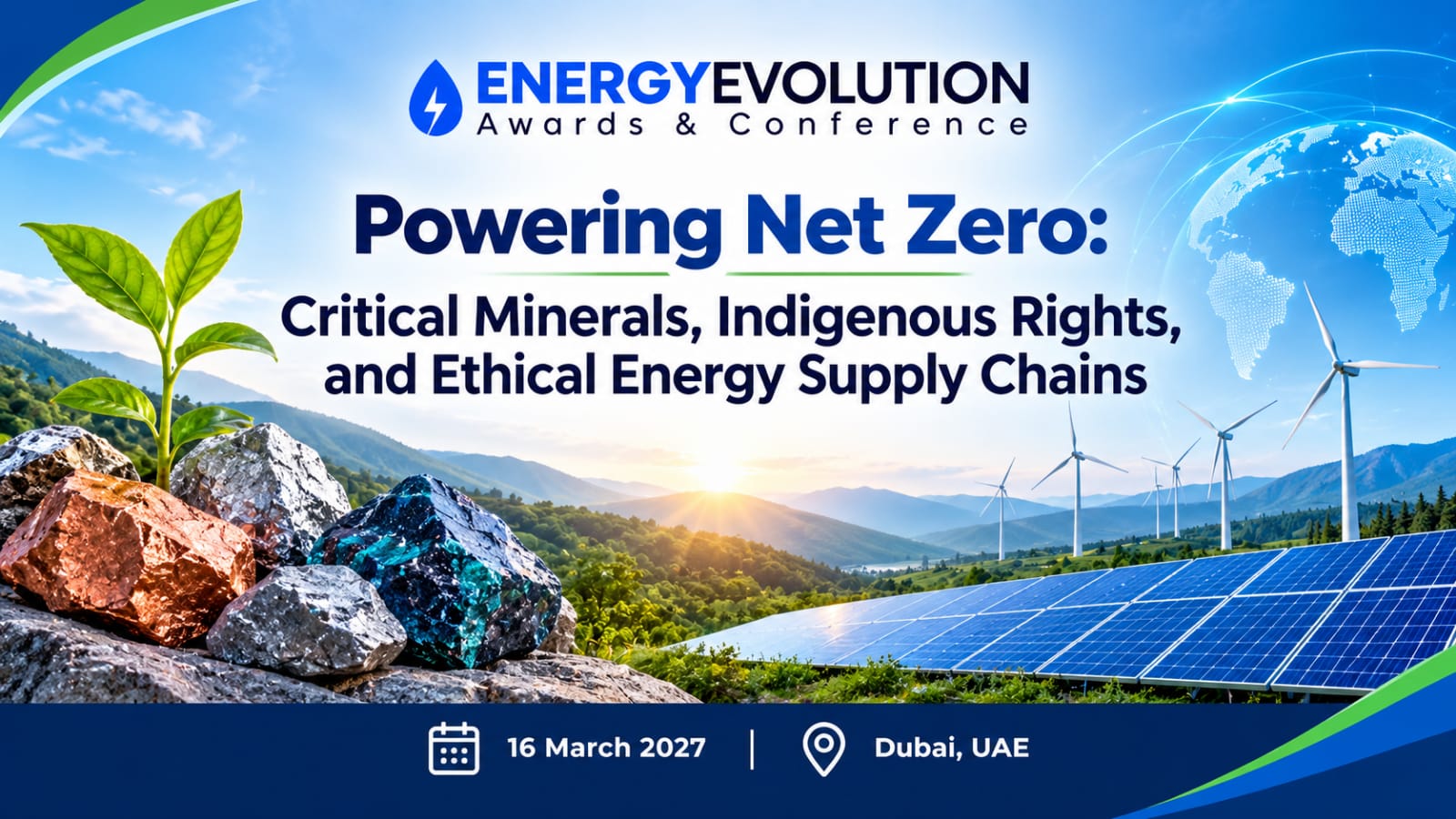
The global transition to net zero depends not only on renewable energy and electric vehicles but also on the minerals needed to build them. Lithium, cobalt, nickel, copper, graphite, and rare earth elements are essential for batteries, wind turbines, solar technologies, and electricity grids. According to the International Energy Agency's Global Critical Minerals Outlook 2026, demand for critical minerals is expected to almost double by 2040, while lithium demand is projected to increase more than threefold under its Stated Policies Scenario.
However, this transition presents a significant challenge. Many critical mineral deposits are located on or near Indigenous territories, raising concerns about land rights, water resources, cultural heritage, and community consent. Research published in Nature Sustainability found that 54% of 5,097 energy-transition mineral projects worldwide are located on or near Indigenous peoples' lands.
This creates an important question for the energy industry: how can the world secure the minerals needed for decarbonization without compromising the rights of the communities connected to these resources?
Critical Mineral Resources and Indigenous Territories
The overlap between mineral deposits and Indigenous lands is not accidental. Many resource-rich regions have long histories of Indigenous stewardship and ecological significance.
Several examples highlight the scale of this challenge:
The Lithium Triangle: Argentina, Bolivia, and Chile hold substantial lithium resources. Brine extraction in these regions raises concerns about groundwater availability, water-intensive operations, and the livelihoods of Indigenous communities in already water-stressed environments.
The United States: Lithium, nickel, and copper development near Native American territories has brought questions about land access, water protection, cultural heritage, and meaningful community consultation into focus.
Global mineral reserves: The Nature Sustainability study found that 85% of lithium reserves and resources overlap with Indigenous peoples' lands, alongside 75% of manganese, 57% of nickel, and 66% of copper reserves and resources.
These findings do not mean that every mining project creates unacceptable impacts. They demonstrate why responsible mineral development must consider human rights, environmental protection, and local decision-making alongside commercial and climate objectives.
Thacker Pass and the Question of Consent
Thacker Pass, known as Peehee Mu’huh in the Paiute language, is a culturally, spiritually, and historically significant place for Indigenous communities in the region.
Located in Nevada, the site contains one of the largest known lithium deposits in the United States. The project is considered strategically important for strengthening domestic battery supply chains and reducing reliance on foreign mineral processing.
Supporters point to its potential contribution to electric vehicle production, domestic manufacturing, and energy security. However, Indigenous community members and advocacy groups have raised concerns about sacred sites, ancestral burial areas, access to traditional lands, water resources, and cultural heritage.
The dispute also raises questions about whether consultation processes adequately reflect the principles of Free, Prior and Informed Consent (FPIC), recognized in Articles 19 and 32 of the United Nations Declaration on the Rights of Indigenous Peoples.
Thacker Pass demonstrates that critical mineral development involves more than resource availability and investment. Meaningful engagement, cultural protection, and Indigenous participation are important considerations in responsible project development.
Why Indigenous Rights Matter to the Energy Industry
Failure to address community concerns can create significant commercial and strategic risks for mining companies, manufacturers, and investors.
Project delays and legal challenges: Disputes involving land rights, water use, and cultural heritage can lead to regulatory challenges, litigation, and prolonged development timelines.
Supply-chain and reputational risks: Automakers, battery manufacturers, and renewable energy companies face increasing scrutiny over the environmental and social impacts of the minerals they source.
Investment uncertainty: Projects without credible community engagement and environmental safeguards may face difficulties securing long-term investment and maintaining stakeholder confidence.
Energy security concerns: Delays or opposition affecting new mining projects can restrict access to essential materials and increase dependence on concentrated supply chains.
For businesses, respecting Indigenous rights is therefore not simply a corporate responsibility issue. It is an important part of long-term supply-chain resilience and responsible investment.
Building Ethical Supply Chains Through Partnership
The solution is not to abandon critical mineral development but to establish stronger standards for how projects are planned, financed, and managed.
Several actions can help the industry move towards a more responsible approach:
Make FPIC meaningful: Companies should engage Indigenous communities before major project decisions, provide accessible information, and respect their rights under applicable international and national frameworks.
Establish fair benefit-sharing: Revenue-sharing arrangements, equity participation, local employment, procurement opportunities, and community-led investment can help ensure that local populations benefit from resource development.
Strengthen environmental safeguards: Independent water assessments, biodiversity studies, continuous monitoring, and enforceable rehabilitation plans should be central to project approval and operation.
Protect cultural heritage: Sacred sites, burial grounds, traditional knowledge, and culturally significant landscapes must be considered during project planning and site selection.
Improve supply-chain transparency: Automakers, battery manufacturers, and energy companies should strengthen supplier due diligence, independent assessments, grievance mechanisms, and remediation procedures.
Support Indigenous participation: Communities need access to independent technical advice, legal assistance, and financial resources to participate meaningfully in negotiations and project governance.
Making the Energy Transition Fairer
The success of the net-zero transition will depend not only on how quickly renewable energy and clean technologies are deployed, but also on how responsibly their supply chains are developed.
Critical minerals will remain essential to electrification, energy storage, and renewable power. However, the industry must ensure that the pursuit of these resources does not come at the expense of Indigenous rights, local livelihoods, or environmental protection.
Moving from extraction to partnership can create a more sustainable model—one that supports energy security while recognizing the authority, knowledge, and interests of communities connected to mineral-rich lands.
Join Energy Evolution Awards and Conference
Connect with energy leaders, investors, policymakers, and sustainability professionals at the Energy Evolution Awards and Conference. Explore how the industry can advance ethical critical-mineral sourcing, Indigenous partnerships, responsible mining, and transparent energy supply chains.
Join the conversation and discover approaches to building a more responsible and inclusive energy transition.
Register now: energyevolutionconference.com