
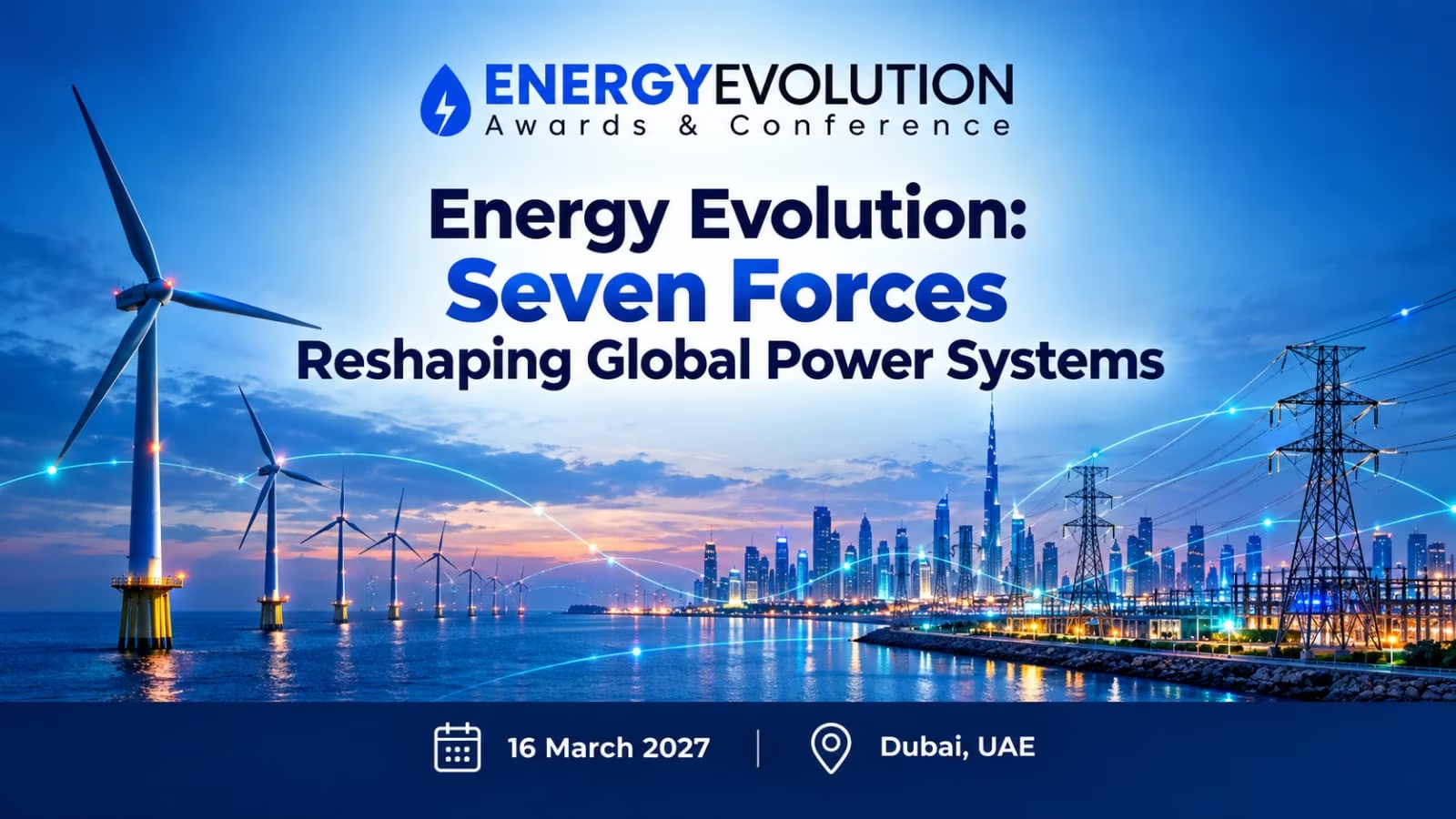
Global power systems are entering a period of significant change. Electricity demand is rising, driven by data centres, electrified transport, industrial activity and cooling needs. At the same time, renewable energy is expanding, while grid capacity, energy storage and system flexibility are becoming increasingly important. The International Energy Agency (IEA) forecasts that global electricity demand will grow by an average of 3.6% annually between 2026 and 2030.
This is more than a shift in energy generation. It is an energy evolution: a systemic transformation in how power is generated, stored, transmitted, traded, consumed and managed.
AI is reshaping electricity demand
Artificial intelligence is becoming an important driver of electricity demand. Data centres require substantial power for computing, networking and cooling, while the expansion of AI applications is increasing the need for high-performance computing infrastructure.
The IEA projects global data-centre electricity consumption will rise from 485 terawatt-hours (TWh) in 2025 to around 950 TWh by 2030. Electricity consumption from AI-focused data centres is projected to triple over the same period.
This growth is encouraging utilities, technology companies and policymakers to rethink power generation, grid connections, energy efficiency and clean-electricity procurement. Meeting demand will require careful planning to ensure that new computing capacity does not create additional pressure on already constrained power networks.
Grids are becoming strategic infrastructure
Solar and wind power are expanding, but their effective use depends on the ability to transmit electricity from generation sites to consumers. Ageing infrastructure, lengthy connection queues and growing demand are increasing the need for grid investment and modernization.
Modern grids must accommodate two-way electricity flows, integrate distributed energy resources, withstand extreme weather and support digital monitoring and control. Transmission expansion, distribution upgrades and smarter network management are therefore essential to improving reliability and integrating more renewable energy.
Grid modernization is no longer simply a technical upgrade. It is a central component of energy security, economic competitiveness and decarbonization.
Flexibility is becoming essential for reliability
As variable renewable energy expands, power systems need greater flexibility to balance electricity supply and demand across different timeframes. Demand response, battery storage, flexible generation, cross-border interconnections and smart-grid controls can all help manage fluctuations.
The challenge is not only to install more renewable capacity but also to use the electricity it produces effectively. Better forecasting, coordinated system operation and flexible demand can reduce congestion, limit curtailment and improve the reliability of power supplies.
Flexibility is therefore becoming a key measure of how effectively energy systems can integrate clean electricity.
Storage is moving from a supporting technology to a core asset
Battery storage is becoming increasingly important for grid stability, renewable integration and backup power. Batteries can store electricity when supply is abundant and release it when demand rises or generation falls.
The IEA’s updated analysis of energy and AI estimates that around 20–25 gigawatts (GW) of battery storage could be installed in data centres globally by 2030. With suitable incentives and system design, these installations could also provide services to the wider electricity grid.
Beyond lithium-ion batteries, long-duration storage, thermal energy storage and second-life batteries offer additional options for specific applications. Their commercial potential will depend on cost, performance, operating conditions and the needs of individual power systems.
Electrification is expanding across sectors
Electric vehicles, heat pumps, industrial equipment and advanced manufacturing are increasing electricity use across the economy. Electrification can reduce reliance on direct fossil-fuel consumption, particularly when electricity comes from lower-emission sources.
According to the IEA’s Electricity 2026 report, electricity is projected to rise from 21% of total final energy consumption in 2025 to 24% in 2030.
This creates opportunities for clean-energy developers, utilities, charging-infrastructure providers and technology companies. However, greater electricity use also creates challenges around peak demand, distribution-network capacity, affordability and equitable access. Coordinated planning and efficient technologies will be important to managing this growth.
Hydrogen and Power-to-X are facing a commercial reality check
Green hydrogen, ammonia and other Power-to-X pathways could help decarbonize sectors that are difficult to electrify directly, including parts of steel production, shipping, aviation and heavy industry.
However, project announcements alone do not establish commercial viability. Developers must address production costs, renewable electricity availability, infrastructure requirements, demand certainty and access to finance.
The next phase will depend on projects that secure credible offtake agreements and connect renewable generation, electrolysis, storage, transport and industrial users into commercially viable value chains. Clear policies and infrastructure planning will also influence the pace of deployment.
Energy security and affordability are shaping the transition
The energy transition is increasingly being assessed through three connected priorities: emissions reduction, reliable supply and affordability. Geopolitical tensions, exposure to fuel-price volatility, critical-mineral supply chains and extreme weather can all affect energy-system resilience.
For governments and businesses, energy security requires more than expanding domestic generation. It also involves diversifying supply chains, strengthening networks, improving efficiency and developing suitable storage and demand-response capabilities.
Successful energy strategies will need to balance decarbonisation with the practical requirements of reliable and affordable power.
Recognizing the leaders of energy evolution
These seven forces are reshaping utilities, renewable-energy developers, technology providers, investors and industrial energy users. Progress will depend on organizations that can turn innovation into scalable, reliable and commercially viable energy solutions.
The Energy Evolution Awards &Conference brings together global energy leaders, innovators, investors, policymakers and sustainability professionals to advance renewable energy, energy storage, smart grids, hydrogen, AI-driven energy systems and decarbonization.
Join the global energy community to exchange insights, recognise innovation and help shape the next phase of energy evolution.