
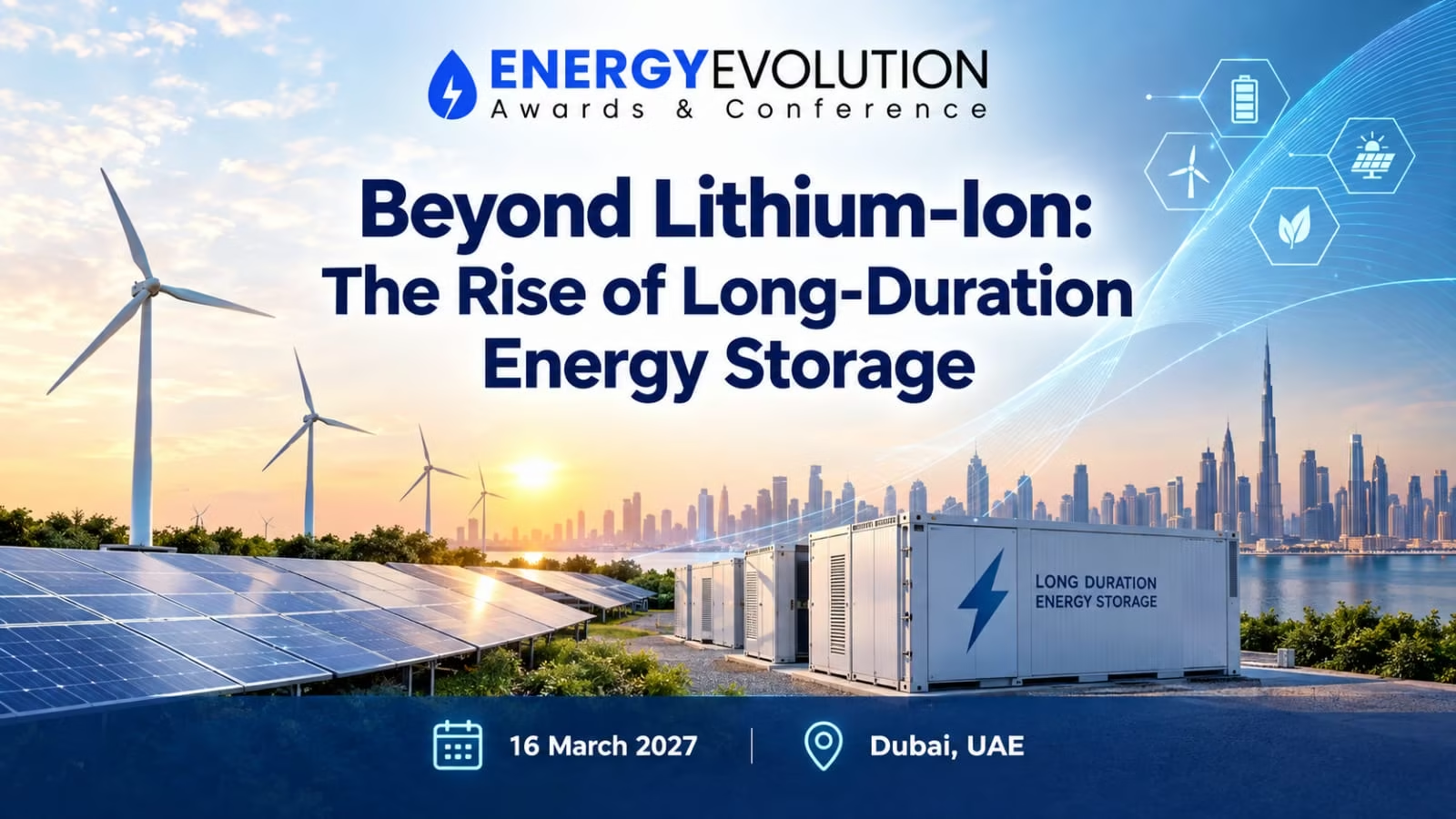
The energy transition is creating a new grid challenge: renewable power is becoming more abundant, but generation does not always align with periods of peak electricity demand. Solar output declines after sunset, while wind generation can vary with changing weather conditions. Long-duration energy storage is emerging as an important solution for bridging this gap.
As the global LDES market expands—from an estimated $7.8 billion in 2026—the need for storage that can deliver more than short bursts of power is becoming increasingly clear. The U.S. Department of Energy defines long-duration energy storage as systems capable of delivering electricity for 10 or more hours. These systems can store surplus electricity when renewable generation is high and release it when demand rises or renewable output falls.
Why Storage Duration Matters
Lithium-ion batteries have transformed the energy-storage market and remain highly effective for short-duration applications. However, grids relying on larger shares of wind and solar need storage that can provide power overnight, during extended periods of low wind or sun, or in the wake of extreme weather events.
Long-duration storage helps shift renewable electricity across hours or even days. It also improves grid reliability, reduces dependence on fossil-fuel peaking plants, and supports the development of more resilient local energy systems.
Technologies Beyond Lithium-Ion
The next phase of energy storage will involve a broader ecosystem of technologies, each suited to different requirements for duration, efficiency, cost, flexibility, and scalability. Rather than replacing lithium-ion batteries entirely, these systems are more likely to complement them across a range of grid applications.
Flow Batteries: These systems store energy in liquid electrolytes and are well suited to frequent, long-duration cycling. Because their power capacity and energy capacity can be scaled independently, flow batteries may be particularly useful for grid applications requiring several hours of storage and repeated daily operation. Companies such as Invinity Energy Systems and ESS Inc. are developing vanadium and iron flow-battery systems for utility-scale applications. Invinity’s current systems, for example, are designed for projects ranging from several hours to more than 18 hours of storage.
Iron-air batteries: Designed for multi-day storage, iron-air batteries could help address prolonged periods of low renewable generation or supply shortages. These systems use reversible iron oxidation and reduction to store and release electricity. Dutch company Ore Energy has tested grid-connected systems designed to deliver up to 100 hours of storage, including a pilot at EDF’s research facilities in France. However, the technology remains at an early stage of commercial deployment, and further testing is needed to establish its cost, durability, efficiency, and performance at larger scales.
Thermal and mechanical storage: Thermal systems convert electricity into heat, which can later be used to generate electricity or supply industrial and district-heating loads. Mechanical technologies store energy through physical processes, including gravity, compressed air, and the movement of water. These approaches could provide alternatives for long-duration applications, particularly where local geology, industrial heat demand, or other site conditions are favourable.
Pumped hydropower and hydrogen: Pumped hydropower remains one of the most established forms of grid-scale energy storage. Its expansion, however, can be constrained by geography, water availability, permitting requirements, and high upfront infrastructure costs. Hydrogen could store energy over much longer periods and may support seasonal energy storage in locations with suitable renewable generation, electrolysers, storage facilities, and end-use infrastructure. Its overall role will depend on system efficiency, project costs, and the availability of reliable demand.
Moving Toward a Diverse Storage Ecosystem
The long-duration energy storage market is expanding as non-lithium technologies move from research and demonstration toward early commercial deployment. Flow-battery companies such as Invinity Energy Systems and ESS Inc. are scaling systems for applications that require extended discharge, frequent cycling, and enhanced grid resilience.
Iron-air technologies are also progressing from laboratory development to grid-connected pilots. Ore Energy’s systems in the Netherlands and France have been designed to store and discharge electricity for up to 100 hours—nearly four days—but these projects are primarily intended to validate system operation under real-world conditions rather than demonstrate mature, large-scale deployment.
The emerging storage landscape suggests that future grid architecture will not depend on a single technology. Lithium-ion batteries may continue to serve short-duration and fast-response applications, while flow batteries could support repeated multi-hour cycling. Iron-air, pumped hydropower, compressed-air, thermal storage, and hydrogen may serve longer-duration or seasonal requirements, depending on their location, cost, efficiency, infrastructure needs, and operating conditions.
From Innovation to Deployment
The key challenge is moving promising technologies from demonstration projects to commercial-scale deployment. Developers must demonstrate that their systems can operate reliably, secure large-scale investment, and compete in electricity markets that do not always fully value flexibility, resilience, or long-duration capacity.
Clear market rules, long-term contracts, and improved grid planning will be vital. Regulators and utilities must also begin assessing storage according to the diverse services it provides—including capacity, balancing, backup power, and renewable integration.
Powering a Flexible Future
Long-duration energy storage is not a replacement for lithium-ion batteries; it is a complement that can address the longer and more complex needs of a renewable-powered grid.
As energy systems become more electrified, flexible storage will be essential for delivering clean power when it is needed. Different technologies will serve different roles, from fast-response balancing and daily energy shifting to multi-day backup and seasonal storage.
The companies developing, deploying, and scaling these technologies will play a defining role in building a more resilient energy future. The Energy Evolution Awards & Conference brings together the technologies, innovators, and industry leaders advancing practical solutions for the energy transition. At the 2027 Energy Evolution Awards& Conference, discover emerging storage technologies and connect with the organizations shaping the next generation of energy systems.