
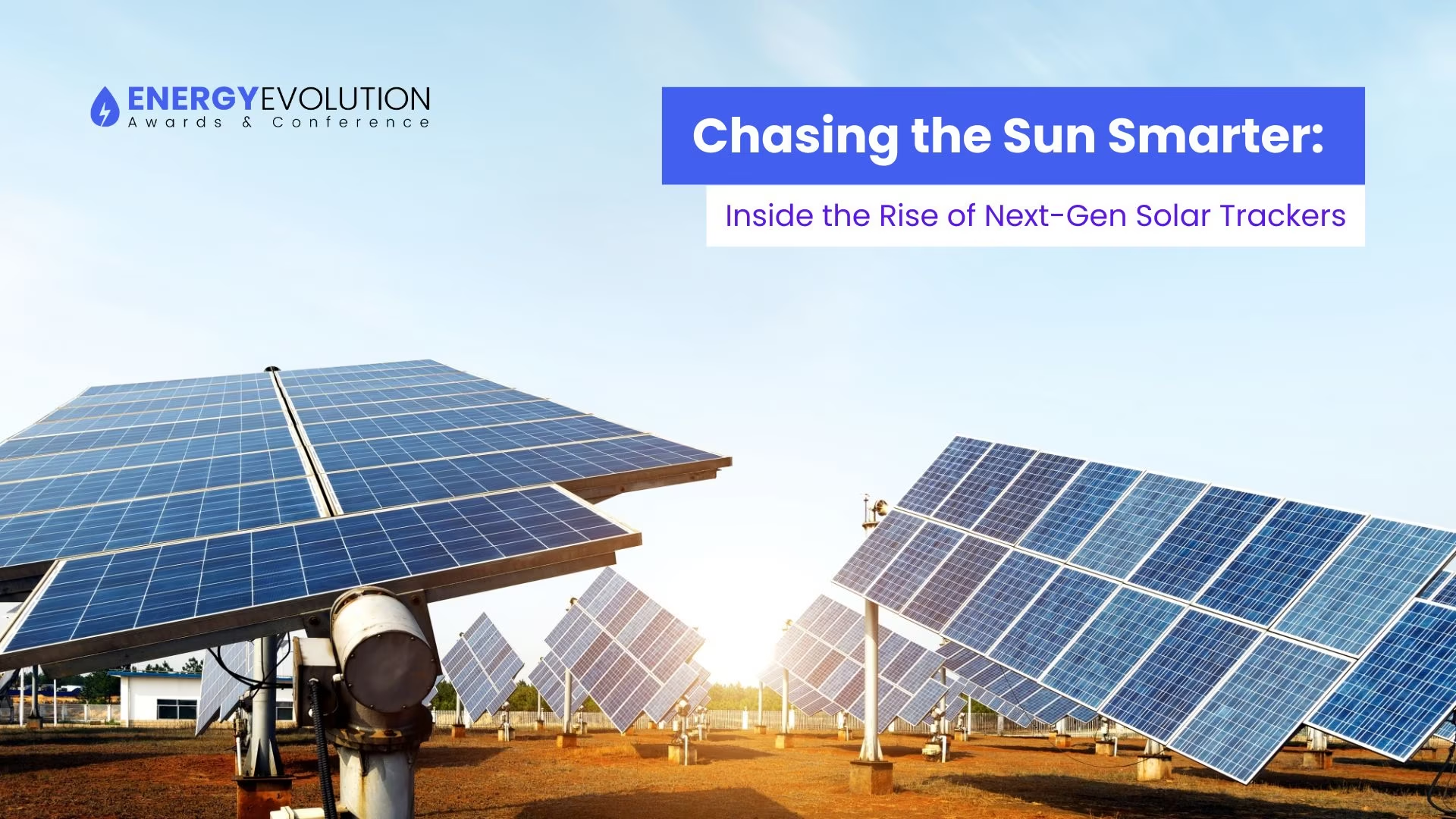
As the world accelerates its shift toward renewable energy, solar power stands out as a leading solution. But while solar panels are widely adopted, their true efficiency depends on how well they follow the sun. That’s where solar tracking systems make a difference.
These dynamic systems enable panels to adjust their orientation throughout the day, significantly boosting power output—by 25–50% compared to fixed installations.
A Glimpse into the Past: Early Pioneers of Solar Tracking
The concept of solar tracking dates back to the 19th century when Augustin Mouchot, a French inventor, experimented with solar concentrators that aligned with the sun. Later, in 1962, C. Finster developed one of the first mechanical solar trackers. These innovations paved the way for today’s commercial tracking systems, now deployed across utility-scale solar farms globally.
As Swedish-American engineer John Ericsson once said:
“You will probably be surprised when I say that the sun-motor is nearer perfection than the steam-engine… but until coal mines are exhausted its value will not be fully acknowledged.”
His foresight rings truer than ever.
The Market Surge: Demand for Solar Trackers
With the global push for clean energy, the solar tracker market is booming. Between 2024 and 2030, an estimated 752 GW of solar trackers are expected to be installed globally—particularly in countries like India, China, and the United States. These trackers not only enhance energy capture but also improve the cost-effectiveness and ROI of solar installations.
According to SolarPower Europe’s Global Market Outlook for Solar Power 2024–2028, a record-breaking 447 GW of new solar capacity was added globally in 2023—an 87% increase from the previous year. Solar PV accounted for 78% of all new renewable capacity additions (576 GW). By 2030, global solar capacity is projected to reach 7.4 TW, significantly exceeding previous forecasts and accelerating progress toward net-zero emissions (PV Tech:Global solar installed capacity up 87% to 447GW in 2023)
Why Tracking Matters
Higher Energy Yield – Panels capture more sunlight throughout the day.
Better Land Use – Maximizes output per square meter.
Smart Integration – Works with real-time data, weather forecasting, and IoT tools.
Latest Innovations in Solar Tracking
To meet growing global energy demands and climate goals, companies and research institutions are pushing solar tracking into a new phase of innovation. Here are four standout developments from 2024–2025 that are redefining solar tracking systems:
1. Nextracker’s 10 GW Milestone and a new Research and Development (R&D) hub in India (2025)
Nextracker, a global leader in solar tracking solutions, marked a major achievement in May 2025 by surpassing 10 GW of installed tracker capacity in India. This growth is supported by the launch of a state-of-the-art 80,000 sq ft R&D and office facility in Hyderabad, which is expected to strengthen local innovation and manufacturing. The facility is designed to support advanced testing, faster product development, and collaboration with Indian partners, cementing Nextracker’s long-term commitment to India’s solar revolution.
2. Antaisolar’s AT‑Spark Tracker Debuts at SNEC 2025 (China)
Unveiled at the SNEC 2025 event in Shanghai, the AT‑Spark solar tracker by Antaisolar features a lightweight, octagonal torque tube and a dual-spherical bearing design for better terrain adaptability. Its SmartTrail™ intelligent control system offers real-time weather integration and enhanced energy output optimization. The tracker’s streamlined design ensures faster installation and maintenance, making it a strong contender for utility-scale projects in diverse geographies.
3. PV Hardware USA’s DeepTrack Platform (USA)
In April 2025, PV Hardware USA introduced DeepTrack, an AI-powered software platform that delivers real-time monitoring, predictive maintenance, and intelligent fault detection for solar tracking systems. DeepTrack not only improves uptime and efficiency but also reduces the cost of operations and maintenance by automating performance analytics and reporting. This innovation underscores the growing importance of digital intelligence in the solar sector.
4. Array Technologies’ DuraTrack Hail XP™ (USA)
To address extreme weather conditions, particularly hailstorms, Array Technologies launched the DuraTrack Hail XP™ in May 2025. This next-generation tracker features a 77° bi-directional stow capability, enabling panels to tilt steeply and protect themselves during hail events. It uses AC-powered stow-on-demand technology and is integrated with SmarTrack® hail alert and passive wind response systems, offering enhanced durability and safety for solar farms in vulnerable regions.
The Future of Solar Tracking
The future lies in intelligent, responsive, and multi-functional systems. Trackers are no longer just about following the sun—they now:
Forecast weather with AI
Optimize performance with IoT
Clean themselves using robotics
Support agrivoltaics and floating installations
Use sustainable materials to reduce environmental impact
These advancements are transforming solar tracking into a core driver of high-efficiency, low-impact solar farms.
Conclusion
From 19th-century solar concentrators to today’s AI-integrated, bifacial-compatible, and eco-friendly trackers, solar tracking systems are evolving fast. With major capacity additions and innovations from industry leaders like Nextracker, Antaisolar, PV Hardware, and Array Technologies, they’re central to the next leap in clean energy.
At the Energy Evolution Awards & Conference, such technologies will be at the forefront—celebrating the thinkers, creators, and systems shaping a smarter solar-powered future.
The event will spotlight cutting-edge innovations in solar tracking, AI integration, and smart infrastructure.
It’s a vital platform for global collaboration, where policymakers, researchers, and industry leaders converge to drive the clean energy transition forward.
