
Introduction
As nations strive to meet net-zero emissions targets, nuclear energy’s reliability and low-carbon profile make it indispensable. Unlike solar or wind, which are weather-dependent, Advanced nuclear technologies offer consistent energy output, paving the way for a sustainable energy transition that aligns with global decarbonization goals.Currently, nuclear energy avoids around 2 gigatons of CO₂ emissions annually,equivalent to removing 400 million cars from the road,making it a key player in achieving net-zero targets.
The Role Of Nuclear Technology
The urgent need to address climate change and transition to low-carbon energy sources has placed nuclear technology at the forefront of the clean energy conversation. Advanced nuclear technologies, such as Small Modular Reactors (SMRs), molten salt reactors, and fusion energy, offer innovative solutions to meet global energy demands sustainably while significantly reducing greenhouse gas emissions.
Upcoming Events
Scheduled for March 13-14 in Madrid, the Energy Evolution Expo 2025 will showcase cutting-edge advancements in renewable energy and clean technologies. The event aims to foster collaboration among policymakers, industry leaders, and researchers to accelerate the global clean energy transition, highlighting innovations in solar, wind, and energy storage solutions.
Additionally, the 16th International Conference on Nuclear Data for Science and Technology (ND2025) will occur in Madrid from June 22-27, 2025. This conference gathers global experts to discuss the role of nuclear data in advancing energy solutions, offering insights into the integration of nuclear technology with clean energy strategies.
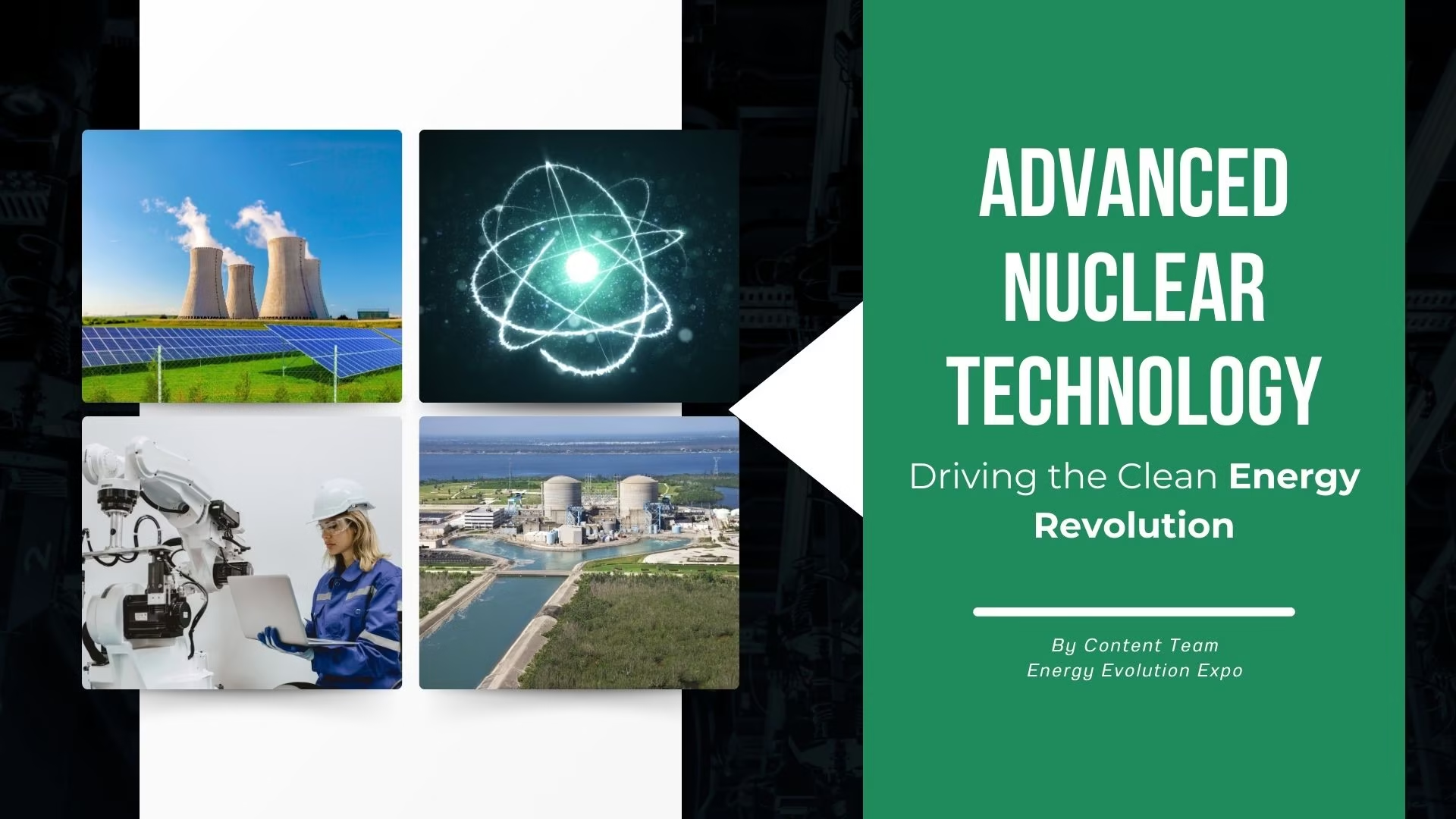
Central to discussions at these events is the concept of advanced nuclear technology, a game-changer in the clean energy revolution.
But what exactly are these advanced nuclear technologies, and how do they contribute to a sustainable future?
To understand their potential, let’s explore the key innovations that define advanced nuclear technologies.
What Is Advanced Nuclear Technology?
Advanced nuclear technology includes new reactors and systems that address the problems of traditional nuclear power. These innovations prioritize safety, efficiency, scalability, and better waste management, making nuclear energy a cleaner and more sustainable option for the future.
Today, nuclear power provides 10% of the world’s electricity and accounts for nearly 25% of low-carbon electricity production. Advanced nuclear technology seeks to expand these numbers while addressing challenges like waste and cost.
Key Innovations in Advanced Nuclear Energy
Small Modular Reactors (SMRs)
SMRs are compact, factory-built reactors designed for flexibility and efficiency. They can be deployed in remote areas, integrated with renewable systems, and tailored to meet specific energy needs. Benefits include:
•Lower construction costs and shorter build times.
•Enhanced safety through passive cooling systems.
•Minimal environmental impact with reduced waste.
SMRs are also cost-effective, with the IAEA estimating a 30%-50% reduction in nuclear energy construction costs.
Case Study: NuScale Power’s SMR in the U.S. is the first of its kind to receive design certification from the NRC, demonstrating its commercial viability.
Molten Salt Reactors (MSRs)
MSRs utilize liquid fuel and molten salts as a coolant, enabling higher operating temperatures and improved efficiency. Key advantages:
•Reduced risk of meltdowns due to inherent safety features.
•Ability to recycle nuclear waste as fuel, minimizing long-term storage challenges.
Fusion Energy
Fusion, the process powering the sun, offers a near-limitless source of energy without long-lived radioactive waste. Although still in the experimental stage, advances such as the ITER project in France and the SPARC reactor in the U.S. are making significant progress toward commercial fusion energy.
Notable Breakthrough: In 2022, the National Ignition Facility (NIF) achieved a net energy gain in a fusion experiment, marking a historic milestone.
Future commercial fusion plants could generate up to 500 megawatts of electricity per plant, helping transition grids away from fossil fuels.
The Role of Advanced Nuclear in Climate Goals
Decarbonization
Nuclear energy is one of the most reliable zero-carbon energy sources. Advanced technologies further enhance its environmental credentials by reducing lifecycle emissions and optimizing resource use.By 2050, advanced nuclear technologies could supply 25%-30% of the global electricity demand, significantly supporting decarbonization efforts.
Energy Security
Advanced reactors provide consistent baseload power, complementing intermittent renewables like wind and solar. This ensures a stable energy grid while reducing reliance on fossil fuels.
Global Access
SMRs and other advanced reactors can bring clean energy to regions lacking robust infrastructure, bridging energy equity gaps.
Their modular design makes SMRs scalable, enabling regions worldwide to adopt nuclear energy based on their unique energy demands.
Key Challenges and Future Opportunities
Challenges:
•High initial investment and long development timelines.
•Regulatory hurdles and public skepticism about nuclear safety.
Opportunities:
•Government incentives and international collaboration can accelerate deployment.
•Innovative waste management strategies and community engagement are key to overcoming barriers.
Conclusion: A Cleaner Future with Advanced Nuclear Energy
Advanced nuclear technologies have the potential to redefine the energy landscape. By addressing safety, cost, and environmental concerns, these innovations position nuclear energy as a cornerstone of the global clean energy transition. As countries explore sustainable solutions to combat climate change, advanced nuclear energy offers a pathway to a carbon-neutral future while ensuring energy equity and security for all.
Governments, industries, and communities must unite to support these technologies, ensuring they fulfill their promise of delivering a cleaner, more secure energy future.