


The global energy system is entering a decisive phase. As countries strengthen climate commitments and industries seek low-carbon alternatives, solar, wind, and hydrogen are emerging as key pillars of the energy transition. Together, they can support a more resilient, flexible, and decarbonized energy system.
The scale of renewable growth shows how quickly this transition is accelerating. In 2024, global renewable power capacity reached about 4,448 GW following a record annual addition of 585 GW. Solar accounted for the largest share, adding 452 GW, while wind contributed 113 GW. The figures demonstrate that renewable energy has moved well beyond the early adoption stage and is becoming a central component of the global power system.
However, adding renewable capacity is only part of the challenge. Solar and wind generation varies with weather and time of day, creating a growing need for flexible grids, energy storage, demand management, and other balancing solutions. Batteries are increasingly important for short-duration flexibility, while other technologies can provide longer-duration storage and support system resilience.
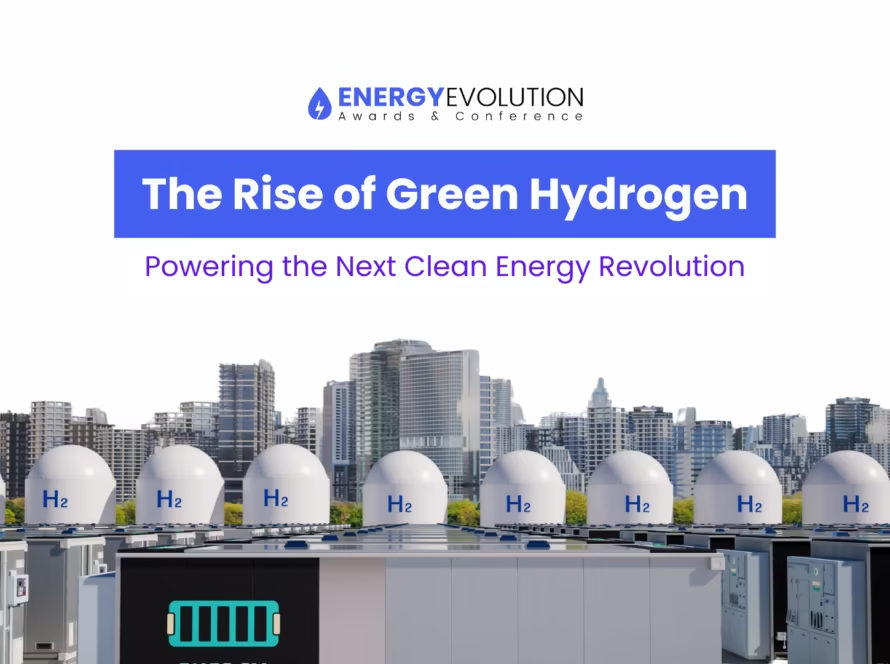
This is where green hydrogen can play a complementary role. Produced using renewable electricity, green hydrogen can help decarbonize sectors where direct electrification is difficult or commercially challenging, including steel, chemicals, shipping, aviation fuels, and heavy transport. It can also provide a way to retain renewable energy for longer periods, although its role must be considered alongside more efficient storage technologies such as batteries.
The investment outlook reinforces the scale of the opportunity. The International Energy Agency estimates that global energy investment will reach about USD 3.4 trillion in 2026, with around USD 2.2 trillion directed toward clean-energy areas including renewables, nuclear power, grids, storage, low-emissions fuels, energy efficiency, and electrification. This growing capital flow indicates that the energy transition is increasingly being driven by infrastructure requirements, technology maturity, energy security, and long-term economic opportunity.
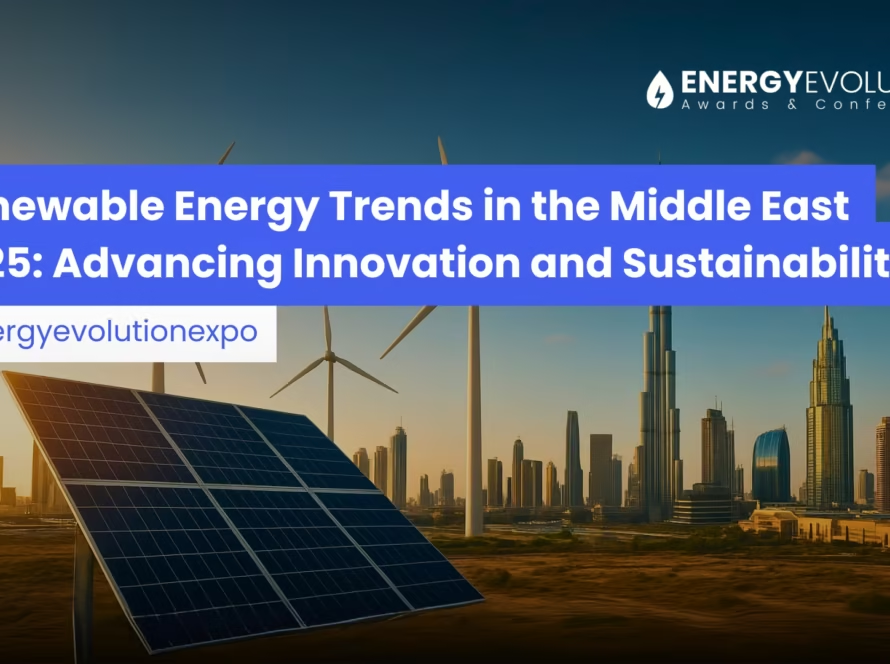
The next phase will depend increasingly on integration rather than individual technologies. A solar plant can provide abundant daytime electricity, wind can strengthen supply when solar generation falls, batteries can manage short-term fluctuations, and hydrogen can serve specific industrial and long-duration applications. Integrated systems can therefore provide greater flexibility while reducing dependence on any single energy source.
The geographic dimension is equally important. IRENA data shows that Asia accounted for 74.2% of global renewable capacity additions in 2025, with China contributing the majority of the region’s growth. This highlights the importance of investment, supportive policies, grid infrastructure, and project execution in accelerating the global energy transition. Countries that align these elements are moving faster from ambition to implementation.
For businesses and policymakers, the message is clear: the energy transition is no longer simply about deploying more renewable generation. It is about building an integrated energy ecosystem in which generation, storage, grids, fuels, finance, and demand work together. Solar, wind, and hydrogen will each have different roles, but their combined contribution can help create a more flexible and resilient net-zero energy system.
Advancing the Energy Transition
The Energy Evolution Awards & Conference 2027 provides a platform for exploring the technologies, investments, and partnerships shaping this transition. Discussions around renewable generation, hybrid energy systems, storage integration, smart grids, green hydrogen, and low-carbon fuels can help identify practical pathways from innovation to deployment.
The awards component also recognizes organizations and projects delivering measurable progress across the clean-energy landscape, highlighting the leadership and innovation needed to accelerate the transition.
Join the Energy Evolution Awards & Conference to explore the technologies, partnerships, and strategies powering the next phase of the global energy transition. From solar and wind to hydrogen, storage, and smart grids, discover how industry leaders are turning net-zero ambition into practical action.
 Reach us on WhatsApp